Reading Rachel
A blog about Jesus, baseball, and everything in-between.
Christ the Victim (part 1).
A few months ago I stumbled across a theologian’s observation that shook me.
It came on a day when I was already swimming in a pool of self-pity and the feeling of culture shock was overwhelming. The thoughts in my mind were a mixture of pride (look how incredible my sacrifice is) and despair (how can I live like this?). My morning quiet time was a desperate hour of asking God to bring relief and ease – even if just for a few hours (though I was really hoping for a lifetime).
And as I was mindlessly scrolling through my Twitter feed that afternoon, this phrase caught my attention:
When you read ancient Christians, you notice: We talk a lot about Christ sharing in our sufferings. They talk more about our sharing in his.
I urge you to read that quote again. Two times. Three times. Let it sink in.
Did you read it again?
One thing that should (but often doesn’t) unite Christians is our worldview. That simply means that as we walk in obedience to Christ we see the world in a different way than is common to man. We receive this worldview from God’s word, in community, with the help of the Holy Spirit and (don’t freak out): tradition. It’s a willingness to receive God’s perspective, though our own are often conflicting and urging.
One of our most conflicting views with the world is how we view suffering. One of my favorite verses from the Apostle Peter is found in 1 Peter 4:12-13:
Dear friends, do not be surprised at the fiery ordeal that has come on you to test you, as though something strange were happening to you. But rejoice inasmuch as you participate in the sufferings of Christ, so that you may be overjoyed when his glory is revealed.
This verse is power-packed with a worldview on suffering. The first thing it tells us is to expect suffering. We don’t need to wonder what we did wrong when we are suffering. We don’t need to channel all of our energy to protect ourselves from harm. We do not need to feel personally victimized by suffering because we know that it is part of life on a broken planet. And it’s especially part of the Christian life (2 Tim 3:12).
And then this verse gets really off the beaten path. Rejoice every time to you participate in the sufferings of Christ. It doesn’t say “tolerate” or “don’t grumble” – it says rejoice. (Peter is not the only one to urge us towards this worldview – James and Paul both write this as well). This is a skill that most be honed, fought for, implanted by something greater than you.
Have you seen those hilarious DirecTV commercials from the Super Bowl of people rejoicing in their suffering?
Why are these commercials so funny? Because it is so contrary to human nature to celebrate hardships. Yet the Bible tells us to do exactly that.
And I love Peter’s why he places at the end. So that you may be overjoyed when his glory is revealed.
I’m not a Bible scholar or a theologian but I think what Peter means is this:
Every time this world hurts, remember that Christ the King is coming again!
The pain of this world will one day pass away!
In 2 Corinthians Paul puts the pain of our suffering on a two-way scale with God’s coming glory and his conclusion is this: far outweighs them all!
How painful our suffering is cannot be measured on the same scale as God’s glory – it is so insignificant. It’s like trying to weigh an ant on a bathroom scale.
Peter, Paul, and James fought this battle their whole lives, as we will also – but Jesus did it perfectly.
For the joy set before Him, he endured the cross, scorning it’s shame, and sat down at the right hand of the throne of God.
Christ is the ultimate victim. As we celebrate Maundy Thursday later this week and Good Friday, we must acknowledge that our suffering cannot compare to what He endured on the cross. He was crucified by the ones he came to save and betrayed by His most intimate allies. He was separated and forsaken by God as He took on a punishment that was rightfully owed to someone else.
Yet He never acted as such.
He could’ve been a king. He could’ve been rich and famous. He could’ve been esteemed by high society.
Yet with all those options available, He chose the cross.
For the joy set before Him.
part two coming later this week…
the cabin.
You probably won’t believe me when I say it’s cold in Taiwan.
This past week it’s been somewhere between the 40s and the 50s outside with an endless stream of rain. Houses in Taiwan don’t have insulation and they certainly don’t have heat so oftentimes it is colder inside than it is outside. I woke up the other day and my living room was 48 degrees! We have a little space heater (thanks to Laura!) but the open concept of our house makes it hard to heat.
The only room in our apartment without any windows is our dining room. It’s not a traditional dining room – it has a refrigerator, an oven, a bright red couch and our kitchen table in it. We’ve quickly found this is the easiest room to heat so we’ve been spending almost all of our time there – Travis, me, and baby Ben. With the exception of sleeping in our beds (and crib) and hurrying to the bathroom, we are in it around the clock. It’s become our little winter cabin.
A friend of mine gave me a book recently about how to balance modern technology and engaged parenting/family life. I’ve been a parent for a few short weeks yet I’m already wrestling with how to create a home that fosters relationship, creativity, and brilliance. In the second chapter Andy Crouch talks about the significance of having a “hearth.”
Usually when we hear hearth we think of “fireplace” but actually the word is more accurately translated as “focus.” Before modern technology the hearth was the center, the focus of the room – it’s what people gathered around – what the furniture was pointed towards.
In our living room we have a massive and beautiful television (by my standards), it actually came with our apartment. We also have an epic couch from Travis’s mom and it’s recliners literally point at the television. We’re not binge-watchers but it does get turned on a few times a week.
But there’s no television in our cabin.
As we’ve set up shop in our cabin-within-the-apartment, I’ve found that the hearth is actually our kitchen table. Travis and I have played countless board games together the last few weeks as Ben watches on. We sit at the table for meals and sometimes have hours of conversation afterwards. Our kitchen (cabin) table has played host to half a dozen guests this past week and our times together have been meaningful and recharging. (Even my introverted husband can agree with that).
As 2018 was rolling in I knew what changes God was asking me to make – and deep down I knew what He was calling me to was so much greater. Yet it took so much will power to let my social media go. I thought being informed made me more interesting and well-rounded, but ultimately it made me less interested and engaged in the world right in front of me.
As I sit in the cabin and write this I am extremely grateful for the peace that comes with engaging in one thing at a time. I love sitting on the red plastic couch with Ben and finding ways to make him smile and coo. How I enjoy the time at the table writing what I hope someday turns into a book. My husband is a wise and incredibly interesting man and I cherish our solve-all-the-worlds-problems discussions after dinner.
I’m always reminded of that Annie Dillard quote: How we spend our days is how we spend our lives.
This season in the cabin represents so much of what I want my life to look like. Being intentional with my kids and husband, writing about things that matter, and sharing God’s love and community around our table with guests of all sorts.
That sounds like a life well-spent to me.
community as the means.
The night before I moved to North Dakota was one of the hardest nights of my life.
I invited a group of my best buds over to my house for a final night together before my early morning departure. We played a few games, told a few stories, and ended the night downstairs with a guitar and some prayer. It was the community I’d always dreamed to be a part of, the one I’d invested so much vulnerability in, the people that had helped me get off the ground as a new believer. When they met me I was selfish and manipulative – I hadn’t the slightest idea how to be a friend. But their grace and love taught me what it looked like to love sacrificially, to champion others above myself.
I looked around at the people who had shaped me, even carried me at times, and couldn’t believe it was time to say goodbye. Of course we’d always be friends, but moving 600 miles away meant they were no longer my everyday people. I couldn’t stop by one of their houses after work to chat, we wouldn’t spend our weekend nights praying together or go on adventures with our time off. They were some of the most precious people in the world to me and God was asking me to let them go. I had stumbled across something marvelous, intangible really, and it seemed like it was gone as soon as it arrived.
To me, community was something to be achieved – something to be sustained. We had accomplished what felt like true biblical community and it only made sense that we should hang on to it for as long as we possibly could. Leaving felt like letting go of something really good, really necessary.
In the years that followed our relationships changed. The depth was still there, but the consistency wasn’t – it’s hard to be best friends with people you see once a year. I knew I needed to invest my friendship elsewhere but it was so hard to start over.
With time, I found and forged a new community in North Dakota. It took years, but we too stumbled upon something great. When I had to say goodbye to them to move to Taiwan the pain was equally great.
But what I’ve learned in these past ten years is that community is so much greater than a feeling or an accomplishment.
Life-giving community isn’t the ends – it’s not the ultimate goal.
As Christians our huddles are meant to be broken, to be shared. The temptation to focus inward in community is too great because it often feels so good, so comfortable.
John 13:34 says “A new commandment I give you: Love one another. As I have loved you, so also you must love one another.”
Invest in community Jesus says – love hard and love well. But He follows this statement with the reason why:
By this all men will know that you are My disciples, if you love one another.
God has given us the gift of community so that we will bless the world.
Community is not at all the ends. It’s the means.
Alex and Rachel and Sarah and Leah and Evan and Cole all taught me what it means to be a good friend. And that means I can teach others. Stacey extended me a grace I didn’t deserve, and I’ve had countless opportunities to pass it on. Dayna showed me what it looks like to champion children and to fight for a Godly marriage – and now I can teach others as I labor to do the same. Ashley taught me how to enjoy healthy food, and someday my kids will eat healthy because of what comes out of my kitchen. My sisters have shown me radical generosity and because of it I’m learning what it looks like to give more of myself. Dave and Chris taught me that prayer is one of the most exciting and meaningful ways to spend time and I’ve carried that awareness with me in every season.
I’ve discovered that community is not the destination, but it’s a great ally in the journey.
Two summers ago my friend Travis and I threw a huge party in the North Dakota badlands. We prayed and prayed over that event, that many of our non-Christian friends and family would see how great Jesus is during our wedding. We carefully chose the music and Scriptures. Our pastor delivered a moving message and Travis shared the gospel with our guests. We hoped God would use our wedding, and more importantly our marriage, as an opportunity display His glory and His goodness.
Travis and I didn’t receive much of a response to our gospel invitation and not many commented on the music or the sermon. But when the topic of our wedding came up, the response I heard the most was “Wow, you have such incredible friends.” This gave us an opportunity to share that our friends love Jesus and that’s what makes them so great.
One of my friends from the restaurant said she couldn’t believe there were so many nice people in one room, none of her friends treated her like that.
God did answer our prayers – the gospel was absolutely on display at our wedding.
By this all men will know that you are My disciples, if you love one another.
Today I met with my YWAM small group, 3 women who I would have never met had I not moved to Taiwan. We agreed that God is at work in each of us and we want to help each other in the right direction. We prayed that our friendships would help us to be better friends to others, that our accountability would draw us into deeper intimacy with Christ.
Again I find myself thanking God for the gift of community, one of God’s greatest tools for getting the gospel into my heart and into the world. What a treasure.

benaiah everett kleppen.
It’s amazing how quickly things can change.
The Tuesday night before Benaiah was born Travis and I enjoyed a quiet night together. We went to bed around 10pm and as usual I tossed and turned a bit longer than him (I was almost 37 weeks pregnant at the time). By midnight I had moved to the couch with some aggressive heartburn, doing my best not to wake up Travis because he was just hours away from his 3-hour Nehemiah lecture. I spent most of the night vomiting and repenting of everything I had eaten in the last 24 hours to no avail. Over the next 3 days the heartburn and indigestion persisted, to the point I couldn’t even finish a glass of water. Up until this point I had had a fairly normal (and mostly comfortable) pregnancy so I just tried to push through and hope that the heartburn would go away.
Friday morning I was on the phone with a good friend and could hardly catch my breath to have a conversation. Thankfully she works at a hospital and demanded that I hang up and go see a doctor. That afternoon Travis and I hopped on the MRT (rail transit) to the hospital and the doctor couldn’t quite pinpoint what was wrong. She said it might be preecclampsia but she didn’t know for sure. She sent me home and told me to monitor baby’s movements and if he seemed distressed to come back right away. Of course that is the last thing you want to be tracking as an expectant mother and it just didn’t sit right with me (especially when your favorite Downton Abbey character died from preecclampsia). I contacted an OBGYN friend from the States and after hearing my symptoms she strongly suggested Travis and I head to the Emergency Room.
The next afternoon we went to the ER, simply hoping for some stronger antacids or medicine. But as we rode in the taxi I turned to him and warned him that if this was indeed preecclampsia we might be having a baby that night (3 weeks early). Within an hour of arriving at the hospital a doctor informed me after looking at my blood that the baby would need to come out as soon as possible. Preecclampsia and jaundice are both results of a malfunctioning liver and my liver was going crazy – and therefore produced both. My platelet levels were severely low and there was no way they could perform any procedure until they got them up. My blood pressure was consistently registering in the 160s and it wasn’t until the 4th platelet transfusion that they could get me into surgery.
As they wheeled my bed up to the surgical floor and I parted ways with Travis I had a strange peace that God was completely sovereign over the situation. I knew the risks were high for baby and even higher for me, but there was such peace in knowing that before I was even born my days were numbered and there was nothing I could do to change it. Even more humbling was the same truth that applied to my unborn son.
They wheeled me into surgery around 2:15am Taiwan time and Ben was born by 2:27am. I was put totally under anesthesia and woke up a few hours later with an empty womb and a good report that our healthy baby boy was already up in the nursery. From that point on things began to improve exponentially. Over the next few days my liver leveled out its production and my appetite returned and chest pains disappeared. Travis and I brought Ben home 4 days later and were astounded how quickly my body had healed itself.
When I finally turned on my phone a few days after the surgery I was flooded with messages of encouragement and prayer. It turns out our home church had all joined together in prayer at the end of the Sunday service – at the exact moment I was wheeled into surgery. We know several of our base leaders sacrificed sleep to be on their knees for us in the early hours that morning. We believe hundreds of prayers were raised on our behalf and in hundreds of ways we saw God answering them. I have come to believe so deeply in the power of prayer and God’s promised and revealed presence through it. He was so near to us during that whole week and we believe the prayers of our people brought Him even closer.
It took Travis and I awhile to come to a consensus on our baby boy’s name, but we both felt a peace about our firstborn being named after one of King David’s mighty men.
When I was in college a good friend gave me a book about facing fear called “In a Pit with a Lion on a Snowy Day.” The author used Benaiah (pronounced ben-eye-uh) as the central character, perhaps one of the bravest men in the Bible (that most people have never heard of). There aren’t any long passages written about him in the Bible – in fact most of his mentions are simply endnotes in a list describing other warriors. But two of his most famous exploits are found in 2 Samuel 23:20 and 1 Chronicles 11:23.
In the first it simply states “he once killed a lion in a pit on a snowy day” as if that is a normal thing to do. And the second describes how he not only killed a giant, but he did it by stealing the giant’s enormous spear and using it as the weapon.
One thing I like about Benaiah is that in situations where most men would run as fast as they could in the other direction, he not only stayed but fought as if he had already won. He had full assurance that He was filled with God’s power and embraced adversity because of it.
As I’ve studied Benaiah I’ve thought how cool it would be to give that name to a son. Now I sincerely hope my son does not chase lions into pits on snowy days, but I hope he has the heart to run confidently towards things instead of away from them. That my son would be assertive, not passive. That he would walk in the confidence of his calling and do truly miraculous things. In a world of runners he would be a fighter. He would fight for justice and the oppressed, relationships and intimacy, the gospel and the nations. His middle name, Everett, means “brave as a boar” and we thought it couldn’t hurt to bestow a little extra bravery in his name.
Benaiah, our little mighty man. You fought your first battle before you were even born! Your mom and dad are excited to see who you become and we pray above all that you would truly know Jesus, that He loves you and has a tremendous life for you here on Earth and in eternity. Your dad and I will strive to make that truth known to you and pray that someday you will make the choice to surrender your life to Him and to chase lions and giants on behalf of the Kingdom of God. What an adventure your life will be!


my favorite adoption story.
I’ll never forget that night and that prayer.
It was October of 2010 and my friend and I were up late into the night praying in the prayer room on campus. I had called her in desperation, I didn’t know what else to do but pray. My sister Katie was sick and had just been re-admitted to the hospital, a major setback in a continued struggle against her mental health.
Two years earlier, my perfectly normal and healthy sister had been diagnosed with post-partum psychosis after the birth of her son. In the weeks that followed his birth her mind began to spin out of control, filling with anxiety and racing thoughts. We watched helplessly as Katie wrestled with her own mind, spending weeks in the hospital and taking scores of medication to try find a sense of normalcy. There was no explanation for its onset other than perhaps a lack of sleep, which is about the most expected part of being a new mother.
In the two years that followed her initial diagnosis Katie made great leaps forward, slowly gaining control of her mind again, though her heavy medication had other difficult side effects. During the summer of 2010 her doctor felt they could decrease her medication enough for them to try for a second child. It felt like the right decision and was a positive step forward in their journey – yet within weeks it landed them back at square one and in the hospital seeking more treatment.
I was devastated when I got the call. Not again! She had come so far, and it felt like she was starting over.
Through tears I begged God to bring healing clarity to Katie’s mind, I knew this was not the real her and I so desperately wanted my big sister, my hero, back.
My friend listened as I cried out and she sat in silence as we awaited a response from God. She prayed very little aloud that night, but I will never forget the one prayer she did verbalize – because God would spend the next 7 years (and beyond) of Katie’s life answering it in only a way He could.
God, we pray that you would heal Katie. But not so that her family can be “normal” again. Lord we pray that through her healing her family would never be normal again.
Almost exactly a year later, a knock at my sister’s door would change our family forever.
Katie and her husband had always wanted a big family, and as Katie’s health improved they both felt as if it was not the time to grow their family biologically. In order to safely carry a child, she would need to make some drastic changes to her medication and they didn’t want to take any chances. Instead, God had placed foster care on their hearts – with the hope of adopting a child or two down the line.
In October of 2011, they received a call from their social worker – there were two girls in need of a home for the next few days and she was wondering if they could take them in. My mother happened to be spending the weekend at their house and was there as they welcomed in a shy and hurting 9-year-old girl and her younger sister, whose body was covered in casts. They would soon learn 3-year-old Emmy suffered from a bone disease called “osteogenesis imperfecta,” also known as brittle bones disease. Even the simplest motion could break one of her precious bones. Up to this point they had been living with their mother, but she was likely headed to prison for several years and was no longer able to take care of them.
Weeks turned into months and every last one of us broke the “attachment” rule of foster care – we knew at some point we might have to give these girls back to their parents, but we couldn’t bear the thought of it. (Little Emmy had taken to calling me “Rachel with a hat on” because I was always wearing a backwards baseball cap when she saw me). They had found their way into their foster aunts, grandparents, parents, and brother’s heart and we knew it wouldn’t be easy to give them up.
There are many details that fill the years to follow, but Katie and Viet officially became the legal parents of Emmy and Angie right before Christmas of 2013. 4 years later and I seriously cannot imagine what our family would look like without them in it.
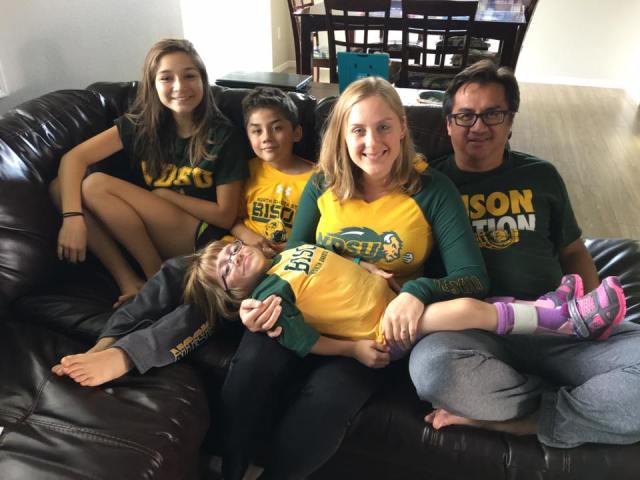
Their arrival at our doorstep spiraled our entire family into a new normal, a deeper and more meaningful normal than any of us had ever imagined.
As I think about my prayers in the early days of this journey, all I wanted was our old life back – I wanted Katie without the scars of mental health and the fear of an unknown future. But God had much greater plans than that, and He was able to use post-partum psychosis to accomplish it. He was writing a much greater story than the one we had in mind, even if we couldn’t see it at the time.
This past week the Fargo Jail Chaplain’s Ministry hosted their annual banquet, an opportunity to share with the community the ways that God was moving through their chaplains and volunteers in the local jails and prisons.
The keynote speaker was a former alcoholic and drug addict who had a few years prior given her life to Christ through a prison-led Bible study. The crowd of hundreds listened as she shared her story of hitting rock bottom, losing her kids, and spending several years of her life behind bars. She was out of prison now and with her newfound faith and healthy surroundings beginning a new life for herself, even to the point of mentoring others who were stuck where she used to be.
But she had one person she wanted to thank most.
My sister, Katie.
Katie. The woman who had taken on the role of raising her two daughters and teaching them about Christ. Through Katie’s example Miki had seen Christ incarnate, and it played a huge role in her decision to surrender her life to Jesus.
So often in the early days of Katie’s mental health struggles I would ask God “why Katie?” Katie was one of the most influential people I’d ever met, and she had done nothing to deserve such a terrible disease. There were times we didn’t know if she’d ever come out of it.
But all along, God was unfolding a much greater plan for her life.
Yes, he would restore her mental health in full. But the scars would serve a purpose. They would lead her and her husband into the foster system, and two beautiful girls into their family. Her obedience and steadfastness to Christ would speak volumes to their biological mom, who was looking for the hope that could only be found in Jesus. He would give her opportunities to share her story with groups of moms, and give them the freedom to confess and process their own struggle with mental health. She would show her friends that foster care was possible, not just for her, but for them too. (Including her little sister!)
The thing I once thought robbed Katie of her mission became her mission.
Katie, you are my hero. You were when I was just a kid looking up at you. And as I’m becoming a mom I thank God for women like you. Thanks for leading the way, you are truly changing the world with your story.
Katie Doan, my older sister, lives in the Fargo/Moorhead Area and keeps a personal blog here. She is also available for speaking engagements, which you can arrange through her website.
the trouble with headphones.
I recently gave away my headphones.
My good headphones. (The ones I wouldn’t even let Travis borrow when he lost his). And even though it was clear God was asking me to do it, it was one of the harder things I’ve done recently.
Every day when I leave my house I check for four things: my wallet, my keys, my phone, and my headphones. I can’t leave the house without them.
I hardly ever forget my phone/headphones because they are almost always jammed in my ears before I even lock my front door. You see, my house is about a 15 minute walk from my classroom (though I’m quickly becoming more of a waddler than a walker thanks to Baby K). It’s the perfect amount of time for me to listen to an interesting podcast or pump myself up with 2 or 3 songs before I go to class. I feel naked without them, it feels strange to walk anywhere without my headphones.
A couple weeks ago I was studying up at the University library and felt a strange tug as I was packing my things not to put in my headphones. I shrugged and packed them away and started my way home. As I was walking, I realized my neighbor (she lives one floor above me) was walking right in front of me. I’d never actually met her before though I’ve seen her probably a few dozen times. I quickened my step and awkwardly introduced myself to which she kindly reciprocated. It turns out she’s from Argentina and she lives here with her sister and her son. The 15 minute walk gave us time to get to know each other and now when I see her I know her name: it’s Veronica.
I didn’t think much of our interaction, but it seems pretty obvious to me it probably wouldn’t have happened if I had kept my headphones in.
Whether we realize it or not, putting in headphones is literally plugging our ears. It’s assuming that nothing I encounter could possibly be more interesting than what I’m listening to on my phone (which is probably Mat Kearney’s “Just Kids” album for the millionth time). And it’s giving the vibe to those around me that I am off duty, uninterested, and unapproachable.
Wearing headphones is the opposite of expectancy.
I was talking about this with my friend Kyla (she helped me make the decision to pitch the HPs). A few weeks ago she was walking down the street and someone saw her carrying her violin. They approached her and asked if she’d like to join their community orchestra, to which she responded a resounding YES! She’d been praying for an opportunity to do something like this but hadn’t the slightest idea who to ask. She didn’t create this scenario, she simply found herself in the midst of it…with ears open.
I’m trying to imagine Jesus cramming his ears with ear plugs as he walked from town to town. How much shorter would our gospels be if they didn’t include stories of people He met on the street? Jesus was always expectant, ready for an encounter with someone who was looking for connection and depth. How strange that I should be trying to do the same thing yet entirely unexpectant for an unplanned interaction?
It’s easy to think of life as a collection of planned events, but that’s not really true is it? How many times has it been the detour or the path that has taught us the most – that has introduced us to new friends and new perspectives? My greatest stories are all the result of an unexpected encounter, detour, or event. My closest friends all appeared in my life when I wasn’t looking for them. And some of my greatest spiritual moments came at the least likely hour from an unlikely source.
A few days after my conversation with violin Kyla, another friend of mine told me she broke her headphones. I looked at my coffee table and my ever-protected Apple headphones and realized it was time to let them go.
In the last few weeks I’ve begun to notice a lot more of the world around me. More people wave and nod at the pregnant “wai-guo-ren” (foreigner). I love watching the kids play at recess as I walk past the elementary school. And expectancy is a lot less heavy than the “just get through this” mentality.
Here’s to expecting! (And not just the baby kind).

joining the debt rebellion.
Could you join the debt rebellion?
This post brings us to the end of this blog series, but I hope for someone it’s just the beginning of a new adventure.
Each of our stories started in a different place – a visit to an old fishing buddy, sitting on a bench overlooking a lake, a conversation on a mission base in Asia. And our victories have taken us all on different adventures in new places. Maybe your story starts with reading a blog series that you saw on social media.
If reading this blog has stirred you in some way, our hope is that you’ll take that first step forward. The step from thinking “could this be me?” to “that will be me, I’m ready to begin the journey.” There is no perfect formula to get you from saddled-in-debt to debt-free, but there are a few tips we can give to get you started.
1. Set a high, yet attainable goal for being out of debt.
Setting a number and a time frame can only help you in this journey. It helps you to know that this season of sacrifice won’t last forever, and it will also help you know how much you need to pay and when. If you’re looking at student loan debt, perhaps $100,000 or less, your finish line should probably not be more than 5 years away. If that number is less than $50,000 I would recommend giving yourself 3 years to do so. If your time frame is too long you’ll find yourself drifting in and out of the “debt priority mindset” which is essential to getting out of debt.
If you’re looking at a mortgage or a much bigger debt, I’d encourage you to shave years off of your commitment to the bank. It’s easy to see our 30-year loan monthly payments as attainable without recognizing the amount of interest we will pay in the end. Add 30 years to your age and ask yourself if you still want to be paying off your house when you’re ______. Commit to giving an extra $500 each month to your mortgage, or more if you can. You could be buying yourself an entire decade of freedom from the bank and saving tens of thousands of dollars in interest.
Be careful that your goal is not too lofty. Look at your income(s) and dream big about how much of it you can put towards debt, but don’t overbook yourself. Getting out of debt isn’t worth losing relationships, foregoing all interests or neglecting your health.
Your goal should exceed your current payments, but it should not eliminate fixed expenses that are necessary for your personal health and the health of your family.
2. Check out different resources!
Dave Ramsey’s Financial Peace University is a popular program for getting out of debt. He brings a lot of wisdom (and success stories) to the table and I believe his method works. None of us followed it exactly, but a few of us used some of the principles he laid out and found them very beneficial. I believe he also has a podcast and a Youtube channel that you can check out for free.
Research different blogs and books written by people who were or are in a similar situation. Debt rebels are everywhere and we love seeing others succeed!
3. Widen your horizons
As almost all of us shared, getting out of debt requires creativity and sacrifice. If you are unwilling to make significant changes in your lifestyle or plans this will be very difficult to accomplish. I did not want to move to a new city, but I’m not sure I would’ve accomplished my specific goal had I not done so. Natalie probably wanted to have free nights and weekends like all of her friends, but she spent a lot of that time earning extra dollars doing odd jobs. I doubt Travis was living the dream in a dark oil tanker.
This adventure begins with saying “I’m going to do this, what is it going to take?” That will look different for every person, but it will no doubt change your lifestyle significantly. (The good news is, the change is temporary and not always bad!)
Here are a few ideas if you’re wondering how you could get started:
- Reconsider your housing situation. Are you willing to move in with a relative to cut down on rent costs? I spent a year and a half living in my cousin’s basement rent-free and that was a game-changer. It probably saved me at least $10,000 in that time span. Is your apartment awesome, but too expensive? Maybe time to downsize. Get a roommate, or three? Is your house a dream, but not realistic in your current budget? Could be time to move to a smaller house – and you’ll probably be able to afford that bigger house later with much less stress!
- Teach English in a foreign country. Countries in Asia compensate foreigners very well to teach English in their schools. This is becoming more and more popular for college graduates looking to make more money while they get to live abroad. You do not need a teaching degree to be hired in most countries, although if you do have one you will likely be compensated more. They usually cover your housing, insurance, and travel expenses, leaving only your food and lifestyle expenses. If this interests you, I highly recommend checking out this Kindle Single, written by a young lady who paid off $80,000 in 4 years by teaching English in Hong Kong. And bonus, you get to travel!
- Consider a physical labor job instead of the office. A lot of us are given this idea that if we don’t start climbing the corporate ladder at age 22 we’ll never reach the top. A lot of young people are taking unpaid internships just to get a foot in the door. But we live in an economy where the elevator up is too crowded and thousands of high-paying labor jobs are waiting to be filled. (I have a relative who owns a cement company and can never find enough help even though he offers housing and high wages). I felt like I had way more options and connections at 25 than I did at 22 – and that was after working in a restaurant for 3 years.
- Get a side gig in a restaurant/bar. This is a good second job that can bring in a few hundred dollars a week and is usually flexible with those already working full time.
- Open an Etsy shop! Do you have a hobby you can monetize? It’s easier than ever to post and advertise via social media.
- Look at your transportation costs. How much money are you spending on your car every month? Parking, gas, insurance, payments, etc. Could you ride a bike to work? The bus? Get a ride with a co-worker? Maybe your car payments are too high and it’s time to trade in for a simpler model.
- See if your boss is willing to give you a raise or more hours/responsibility. If you are a good employee (one that isn’t texting through your whole shift) odds are your boss will want to keep you around. It’s worth asking! You could say “Hey, I’m trying to pay off my student loans and considering getting a second job to help with that. Is there a way I could get a raise or more hours here so that I can focus more on this job?”
- Find a need in your community and meet it! Do you already own a snowblower? Cha-ching! You can’t imagine how many old ladies (sorry mom) would pay you $20 to clear their driveway. Mowing lawns, babysitting, day care – it doesn’t need to be an extravagant business idea.
- Sell things you don’t need. “Toys” is no longer just a word to describe things that kids have. A lot of adults invest their money into fun gadgets or vehicles that they hardly ever use. Do you need two motorcycles when you’re the only driver in the house? Look through your closets – you might have a few hundred dollars worth of designer clothing you don’t wear that someone else wants. Have a garage sale and put 100% of the proceeds towards debt.
4. Establish an accountability team
Surround yourself with people who know what you’re up to and who are wise with money. Yes you will have friends who inevitably tempt you by their spending habits, but make sure you’re not the lone wolf in a ravenous pack of spenders. From day one I made my intentions pretty public (I keep a blog) so that people knew what I was up to. This was so when the urge to “go to Hawaii for a month!” popped up I had enough friends and family to be like hey, no way girl. That’s not gonna get you there.
There will be days when it’s hard to be the low-spending friend constantly simplifying, but eventually your friends will catch on. If your friends can’t respect what you’re trying to do and continually try to pull you into their over-spending habits, maybe it’s time to try make some new friends that can be on your team. The whole point of friendship is to help each other become the best versions we can be and friends who care more about their impulses than your growth probably aren’t the best to have around.
In closing, I want to encourage you by sharing what life post debt marathon is like.
Any time you establish a new set of habits over a long period of time, they will likely stick. A few years ago I gave up eating sugar for 6 months and over time candy and cookies just didn’t sound good to me anymore. It’s because my tastes had changed and I learned not only to enjoy healthier foods, but to prefer them.
I believe it is the same with wise spending habits. Putting things on credit cards and overspending might feel fun at the time, but after you’ve given that up for a year or two you realize how vain of a pursuit it is. There is way more enjoyment to be had in purchasing an item or taking a vacation that you’ve saved up for in advance. And then after you buy it/return home, it’s already paid for!
The good news is that once you are out of debt you will have more financial freedom to do things you couldn’t before. For some that means taking vacations or eating out or finally buying a house. But you will also have a new set of habits that make those things a “treat” and not an assumed purchase. Even though I have more money now to go eat out I actually prefer to cook at home because I’ve found it to be a life-giving activity. Most of the hobbies Travis and I have are either free or cheap and it’s simply because those are the things we enjoy doing.
After coming out victorious in your battle with debt, I guarantee you will not quickly want to bury yourself in more debt. Not only did you earn a zero balance, but a new set of skills and perspectives that will help you stay above the line as you move forward with your life.
So as you ponder if you could be the next warrior in the debt rebellion, my simple question for you is this: why not you?
What better time than now to take hold of your finances and start moving in the right direction? There is no debt too deep or situation too dire that you cannot start moving towards freedom.
It’s time to take that first step, go for it!

debt rebellion, part 5: travis’s story.
I got this snapchat from my friend Travis a few years ago.

He had just finished paying his final loan after 8 months of hard work and determination. Travis is not a man of extravagant wants, but simple pleasures. I’m thankful to have learned from him in his season of paying off debt and continuing to live a life outside of it. Here’s his story in his own words!
Initial Debt: $17,000 (student loans)
Time frame: January 2014-October 2014
I left the U.S. on September 6th of 2012.
This was my first real taste in the mission field. My initial plan was to come to Taiwan for a five month school, go home and resume life in America. Five months turned into over a year, and after studying the Bible for nine months, I knew my life in Taiwan wasn’t over. I knew I wanted to come back for a longer commitment to hopefully make a bigger difference. However at the advice of a couple of my leaders, I knew I was going to have to pay off my student loans before I could make a serious commitment to Taiwan.
I had initially studied university in the Fargo/Moorhead area and planned on moving back at the end of the Bible school. But I began to feel God leading me to come back to Taiwan, and it became clear to me that if I wanted to honor that commitment, I needed to go somewhere where I could pay off my loans more quickly. So I headed to the land of the American black gold rush of 2013… Williston, North Dakota.
I took a few weeks to rest after a long and tiring season studying the Bible in Taiwan and got my first job. I was offered a job working overnights guiding traffic and having oversight of oil well sites, however I politely declined and took a day job getting in dirty old oil tanks and cleaning the sludge and old oil off the bottom with a vacuum so powerful it could nearly rip off your arm. If you want to see what I was doing, this video shows pretty much exactly what I did. (https://www.youtube.com/watch?v=kFBJa8YZH0g)
I worked that job for a couple months and got offered a better job with better pay and weekends off at my friends company doing safety inspections for oilfield companies. I worked this job for the next year and was able to pay off about $17,000 in loans in about ten months. Most people will look at jobs like this and think them unfulfilling and not worth it. For me, it was an opportunity to get out of debt so that I would be free to go where God had called me, which was back to Taiwan. But even though these jobs weren’t glamorous, I learned to enjoy them.
I know not every person has the exact same opportunities that I had to pay off debt, but I want to share a few things I did to get out of debt that I think can be helpful for anyone who wants to be debt-free.
- Make being debt-free a value. This is key in paying off your debt quickly. When I was working at my first job in the oilfield, a trainer I was listening to talked about values and if a person values something, it will be a priority. If you want to pay off your debt quickly, don’t just make this a priority, cultivate being debt-free as a value. If you value paying off debt, you will do it. Priorities ebb and flow. Values last a lifetime.
- Know what you need. What I mean by this is know what your fixed expenses are. Know how much money you need for rent, tithing, cell phone payment, food, gas… the essentials. Once your needs are met, put everything you can to your loans. For me, as soon as I got my paycheck, I calculated about what I would need for the next couple weeks and then throw just about every dollar I could at my loans. I didn’t have a credit card at the time and I figured, I can’t spend money I don’t have. It may seem challenging, but in the long run, it will save you hundreds and probably even thousands of dollars of interest. Rather than getting to the end of the month and seeing what you have left, put money towards debt early.
- Find inexpensive ways to be entertained. Going to the theater, going out to eat often, and traveling are expensive. Find things you can do for free or cheap. For me it was board games, cooking with friends, and watching movies at home. If you like entertainment, rather than going to a couple movies and having cable, get Hulu or Netflix for ten bucks a month. Get books from the library. Start a board game or movie night. There are hundreds of ways to find entertainment without spending an arm and a leg. Find those things that work for you and do them.
- Be willing to take a job you don’t love. People in the millennial generation especially want to find a job they feel fulfilled in or they feel like they are making a difference. Be willing to put your dream job on hold for a job that will pay your loans off. Cleaning out oil tanks wasn’t a world changing job. I didn’t wake up every morning at 5:30 and say, I just really want to suck sludge off the bottom of a dirty old oil tank today. But remember, every job needs someone to do it and even if it isn’t a world changing job, you will learn humility if you end up doing a job nobody wants.
- Work Hard & Rest Well. Work hard when you are at work. Be willing to put in overtime if your job allows it. Take an extra shift if possible. That money can all go straight toward paying off debt. But don’t forget to rest. Contrary to popular belief, it is possible to rest and even enjoy a season of life when you are working hard and spending little. If you don’t rest, you will burn yourself out.
If I could reiterate one thing that has been repeated is that paying off debt is addicting (in a good way). Every time you get a paycheck and you put 500, 1,000, 2,000 dollars towards your loans, it’s rewarding watching the dollars drop like cockroaches in the Kleppen house in Taiwan. And once you get your first paycheck after you have paid off your loans, treat yourself, do something you enjoy. Take a little trip. And then, start giving more money away, saving it for a house or something else. Continue to cultivate healthy habits with money. Just a few nuggets of wisdom from a guy who’s debt free.
debt rebellion part 4: tom & katie.
I first met Tom & Katie at a birthday party.
They had just pulled into town and came over to my house for a birthday party of a girl they didn’t even know (don’t worry, they did have a connection – they weren’t totally birthday party crashers). I was just putting away some leftover chili and offered them some – to which they gladly received. One of the first things I learned about this couple is how resourceful they are. They didn’t feel weird accepting a bowl of chili from a stranger at 10pm – it was free!
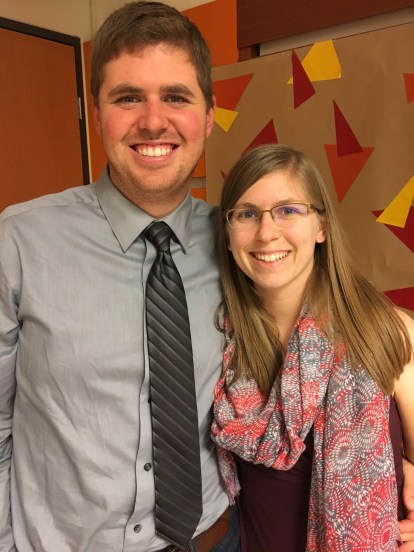
Before you get the impression these two are hobos, let me stop you. Tom & Katie both moved to North Dakota from Wisconsin with college degrees, Katie had just completed her masters at USC. Tom supported them both as she went through her online program and they had been living about as simply as one can (on a $9/hour income) before moving to the oil patch.
Within the first week they had both acquired good jobs – Tom got a job with an oil company and Katie got a job in her field working for the county. And they made a simple and profound decision: they would never use Tom’s paycheck for anything other than debt. Here’s a couple who literally just quintupled their income and had no intention of living a more extravagant life.
Initial Debt: $100,000 (2 undergrad degrees, a masters degree, and a car to be purchased later)
Time Frame: November 2013-May 2016
It was amazing to watch how Tom & Katie chose to live in this season. In our group of friends they might have had the highest combined income – but you’d never guess by how they lived their lives. They were generous with others, but rarely spent money on themselves. The furniture in their house was simple and I don’t think they hardly ever went out to eat. When I asked them what changes they made to their expenditures, they said the only thing that changed was their giving went up with their income.
I asked them what was most challenging about their 2.5-year season of paying off debt and they said first and foremost their work schedules only allowed them 2 off days a month together. Tom worked every other weekend and usually his off days were during the week while Katie was at work. They had to be intentional about building into their relationship in the time that they had.
The other thing they said was challenging was living simply in a land of extravagance. I think they make a great point about the “Williston” method of paying off debt. It’s easy to think they were only able to pay off debt because the oil boom gave them two good jobs. But after living in the oil patch for 4 years I have a longer list of people who acquired more debt in Williston than paid it off. This journey takes intense focus and motivation and Tom & Katie walked that journey well. They were surrounded by people buying houses and boats and fancy dinners out but they continued to live simply – and I think that’s why they are so far ahead of the curve.
Another thing I love about their story is that they left Williston with much more than a positive bank balance. Katie took a job that was probably above her skill level at the time and she worked to earn it. She studied hard outside of work to pass certification exams (which her company paid for) and she has more certifications and qualifications than probably any 20-something in the country. When she would get sent to work conferences she’d be the youngest person there by 20 years – nobody in their 20s was doing what she was doing. And when she and Tom were done paying off their loans they were able to move back to Wisconsin with thick resumes and the freedom to drop their income.
Tom & Katie’s story is important because it preaches a strategic advantage for married couples (if that’s you). It’s an old trick, but a simple and effective strategy is to start your marriage living off of one income. Odds are that you’re probably still both working in some capacity and if you can set a lifestyle that a single income can afford this provides you two major advantages:
- You can use spouse #2’s income to strictly pay off debt or save money. This could easily be upwards of $25,000/year.
- When and if you have kids, one of you can stay home with them without the sticker shock of losing your second income.
To me this is such a simple but profound strategy – one that served Tom & Katie well. (SERIOUSLY THEY PAID OFF $100,000 in 2.5 years!)
The mistake most people make when their income goes up is that their lifestyle goes right up with it.
And in fact, people’s lifestyles often increase at a faster rate – leading to unnecessary credit card debt and stress.
I remember a story my friend Greta told me about her dad, a successful businessman in Minneapolis. He came home from work and told them that his company had acquired a few more companies and would be expanding. As a young child she quickly asked, “does this mean we can buy more stuff?” I think she got grounded. That was the furthest thing from his mind.
People who strive to keep their lifestyles simple in the midst of increasing income are the ones who come out on top. They have money saved when an emergency arises – and their retirement fund keeps getting bigger and bigger. Tom & Katie aren’t even 30 and they are both debt-free and have 3 degrees (and Tom is working on the 4th). If they want to buy a house or have kids they are set up to do so without living paycheck to paycheck. In fact right now they’re saving up to buy a house in full. Wow! Did I mention they’re not even 30?
At the end of my conversation with them I asked what advice they have for those seeking to get out of debt. Here’s what they said:
- Make a plan, specifically a budget, and stick to it.
- Be prepared to make sacrifices.
- Seek accountability. Having people encourage us and pray for us was huge!
- Set goals and don’t be afraid to reward yourself (within your budget) when you achieve those goals.
- The freedom to go wherever God calls you to, and not be hindered by your debt, is worth it.
I spent Thanksgiving of 2015 in North Dakota with Tom and Katie before moving to Taiwan. As a joke I invited them to our house in 2016 for Thanksgiving (we live in Asia now). And guess what? They came! (Further proving my motto: “It doesn’t hurt to ask”) They had just finished paying off their debt and bought two roundtrip tickets to Taiwan with cash. We had an absolute blast exploring the island with them and celebrating their great accomplishment. Travis and I are so thankful to have them as friends and they have taught us so much about living simply but fully. Here’s a few pictures from their victory lap:


debt rebellion part 3: rachel’s story.

June 2016, Erdenet, Mongolia
Initial Debt: $42,000
Time Frame: January 2012-June 2014
A lot of young people struggle with finding purpose in what they do. I have several friends who worked a few different jobs within their first year or two out of college trying to find the right fit. And one of the best things about paying off my debt right out of college is that it fulfilled the “purpose” problem. I can’t say I would’ve been content with any job, but whenever that fear of “what am I doing with my life?” crept up on me, I was able to say: I’m getting out of debt.
This was a freedom that allowed me to do things out of my comfort zone – because I knew this season wouldn’t last forever. And that’s my first piece of advice to anyone who wants to be debt-free: this is just a season. I gave up a lot (and took on a lot too) but I always knew that I was working my way out of this lifestyle. It gave me the freedom to say no a lot more than I wanted to and to take jobs that I didn’t necessarily want. I knew someday I’d be able to say “yes” and I’d have a lot more freedom to work my dream job (which I’ve realized isn’t in as narrow of a category as I once thought).
My first big change was location. I packed up my metropolitan life in Minneapolis and moved into my cousin’s basement apartment in Williston, North Dakota (thanks a million Paula!). In January of 2012 Williston might have been one of the most unattractive places for a young woman to move to, but I had an opportunity and I took it. Williston at the time was flooded with oil workers coming to get their piece of the modern day gold rush – and almost all of those “immigrants” were men. Some estimate the ratio of men to women was as high as 75 to 1. (I think 15 to 1 is more accurate, and still astounding). Think semis, dust clouds, long lines at Walmart, and long and laborious work shifts – the money was plentiful but it wasn’t cheap.
I had a college degree but ended up choosing a career in the restaurant industry. The reason I went this route is that the pay was essentially unlimited and I could work as much as my legs could handle. I’ve never really been a 9-5 desk job kind of person and this lifestyle fit me well.
When I first started at the fine dining restaurant I had a steep learning curve. I knew nothing about fine food, wine, or liquor, yet I was servicing $500 dollar tabs on a regular basis. I was making crazy tips but I wanted to be worth it. I would come in an hour before work and talk to the bartender as she was setting up, I would look over every bottle of wine and alcohol we had, and tried to memorize everything on our menu. (You can’t imagine how many words I googled during that season). Initially I was working 6 nights a week (we were closed on Sundays), but I realized having no social life whatsoever wasn’t conducive to a healthy lifestyle. I settled for 5 nights a week and eventually got a second job working as a substitute teacher in the school district.
I want to acknowledge that my level of income during that season is not something that anyone can just step into – it was an oil boom and money was plentiful for all in that place and time. However, what I think is more important to note is that your level of income is not your primary indicator of debt-paying ability. I started off the journey on the wrong foot. I had hundred dollar bills stacked in my dresser and started making expensive purchases that put me in the same camp as anyone else. For the first 2 months I was working my tail off and making zero headway on my debt.
To pay off debt you must find a combination of increasing your income and decreasing your expenditures.
Month 3 I started to make some significant changes and that’s when the magic started to happen. I gave up traveling home every 3 weeks to see my friends and family. Even though I was making a lot of money, every trip home would cost me at least $200-$300 in expenses and another $300+ in missed work shifts. That was $600/month that could be going to debt. My phone bill was an outrageous expense so I turned in my iPhone 5 for a flip phone. I would eat leftover food from my restaurant instead of stopping to get food on my way home from work (because who wants to cook at 1:30am?). Maybe it was only $7-$10/day I was saving, but over time that really adds up – to the tune of $300 a month!
For anyone getting started on paying off debt I would recommend increasing your income by at least $100/month and decreasing your expenses by at least $100/month. This is just a starting point but that’s already $200 you can be paying on the PRINCIPAL of your debt! Remember, anything extra you pay over the minimum is 100% interest-free – I got addicted to it! Just like Natalie it became a game to me to see how much extra I could pay each month. Sometimes it was $50, sometimes it was $500 – but it always felt good and made me want to work harder next month.
For those that say they don’t have any way of increasing their income (your boss would laugh at your request for a raise), it’s time to think outside the box! What skills do you have? How can you make money on the weekends? Can you make and sell something on Etsy? Is there stuff laying around your house you can sell? I believe anyone can make an extra $100 every month by just being creative (I actually believe anyone can make a few hundred dollars extra every month).
And for cutting expenses? I guarantee there is a lot more “fat” in your budget than you realize. Look at your bank statement! Where are you wasting money? Hint: it’s usually the small things. Daily stops at the gas station for a soda or a snack, your HBO add-on, paying for Netflix when you can share it with your friends. I avoided going out for coffee like the plague – I don’t even drink coffee yet in college I’d be going out for weekly coffee dates with people just to connect. Go for a walk instead!
I eventually got to a place where my job at the school was covering all of my bills (less than $1,800/month), so I made a commitment to putting 80% of my restaurant money towards debt (20% of it was going towards my tithe). One December I paid off $4,500 in one month (thank you oil company Christmas parties)!
I can give all sorts of little stories of things I did or didn’t do during this season, but I want to encourage you with three simple pieces of advice:
1. If you think you can do it, you can. If you think you can’t do it, you probably can’t.
Determination is 99% of this thing. If you have an attitude of “well she only did because of ___ or I don’t have the same opportunities…” you’re probably right. If I had had that attitude I would’ve never left Minnesota and probably would’ve spent the next 3 years feeling sorry for myself that my options were so slim. When you set a high goal and are determined to achieve it, you will make it happen – whatever it takes.
2. Creativity is key.
Like I said before, making extra money and cutting your expenses is essential to this thing – it’s one thing all 5 of our stories have in common. And most of us would agree that we had to think outside of the box to make this happen. For some of us that meant moving to a new city and for others it meant doing odd jobs on the weekends. I remember one month I decided to see if I could go 30 days without spending any money. After I paid my necessary bills on the first of the month I resolved to spending zero dollars for the next month. Crazy right? Here’s what that looked like: eating a lot of leftover restaurant food and my sister/dad’s garden produce and getting rides to work from my co-workers. I actually learned how to cook a spaghetti squash! Going for walks with friends instead of going out for dinner. Watching a movie I already owned instead of going to the theater. I was afraid my experiment would turn me into that horrible friend that was ruining everyone’s plans but actually it helped my whole friend group come up with creative and free ways to hang out. I guarantee, seriously guarantee, you can take up the +$100/-$100 challenge on any income or situation. You just have to be creative.
3. Remember this is just a season.
One of the toughest parts about paying off my debt was watching my friends live awesome lives while I slaved away at work. I had to turn down vacations with college friends and going out to eat at restaurants that I really liked – I even had to miss a really good friend’s wedding. If I felt like this would be the rest of my life I don’t think I could’ve done it. But I knew it was just for a time.
And now? I can do those things, and I can do them with cash. My husband and I have both been debt free for about 3 years, and we’ve kept it that way. We figured out we were (slightly unexpectedly) pregnant earlier this year and we didn’t need to freak out about how we could afford the little guy. Even though we’re missionaries with a small salary we can still get away once in awhile and go out to eat sometimes. To this day we’ve never put any expense on a credit card and we have more than enough saved for an emergency. And all we did was put our lives on hold for 2 years. And the older we get, the more we realize how tiny 2 years is in the grand scheme of our story. We have the rest of our lives ahead of us and we’re thankful to be living in the black.
Bonus tip: start planning your victory lap from day 1! Your victory lap is the adventure you get to take or thing you get to buy once you are debt free. (Note: don’t go into debt for it).
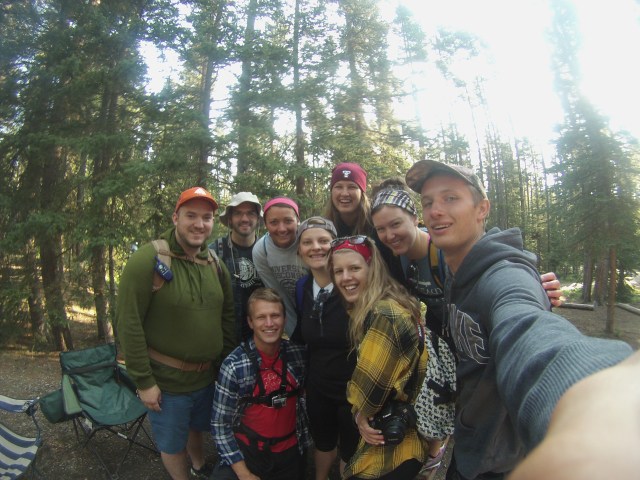
First I started by having an epic birthday party with so many friends and family that supported and encouraged me along the way – I mean, you gotta celebrate! And then I got to do two things (though I confess one was a treat from my dad). I went to the MLB All Star Game in Minneapolis in 2014 and then a 9-day camping trip through Banff National Park and Glacier National Park with 7 of my best buds from college. It was an amazing summer and I didn’t have to use a credit card to pay for any of it!


Up Next in the series: Tom and Katie!
 Reading Rachel